
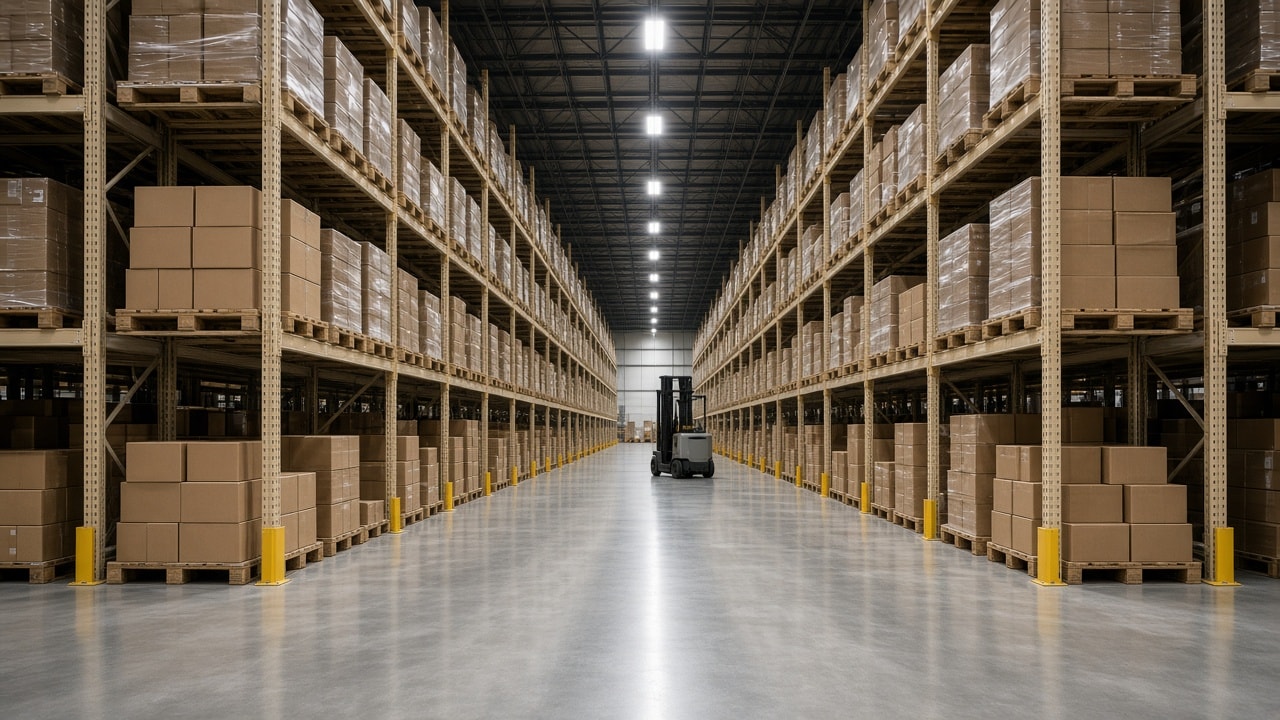
Warehousing and distribution
Warehousing and Distribution in the UAE
Warehousing is not a building on a brochure. It is the decision about where goods sit between customs release and the moment a site, a store or a customer can take them — and what that wait does to duty.
At a glance
- Short-term holding after release
- Free-zone and mainland choices
- Call-off and split deliveries
- Cross-dock where storage is unnecessary
Available across all seven emirates.
Quick answer
When does a UAE shipment need warehousing?
A shipment needs warehousing when it cannot move straight from the port or airport to the final address. Typical reasons are a site that is not ready, a delivery window that is days away, stock that will be called off in parts, or cargo that should stay under customs control until it is sold or re-exported.
Where it sits matters. Mainland storage usually follows a customs release, so duty and VAT have already been dealt with. Free-zone storage can keep the customs suspension in place, but only if the transfer into the zone is declared correctly. Leaving a container at the terminal because there is nowhere else for it is the expensive version of the same problem: demurrage, not storage.
Importers often discover they need a warehouse on the day the box is available, which is the day storage at the port starts to hurt. The useful version of warehousing is decided when the sailing or the flight is booked: how long the goods will wait, whether they are cleared or still under customs control, and how they will leave again.
RSG Shipping arranges storage and the distribution that follows. We do not publish a square-metre count or a warehouse we have not been asked to name. The service is the plan — which facility fits the customs status of the goods, how they are received and released, and which vehicle takes them to the next address across the emirates.
Distribution in the UAE is mostly a road problem after the warehouse door. A pallet that left Jebel Ali cleanly can still fail at a mall service yard, a labour camp or a high-street receiving dock. The warehouse booking and the delivery booking are the same file.
Service summary
- Service
- Warehousing and distribution
- Coverage
- All seven emirates of the UAE
- Typical clients
- Importers whose site is not ready
- Where to start
- Send us the shipment details
Often combined with
What it covers
Scope of the service
Specific, so you can tell whether it matches what you need — and whether anything you need is missing.
- Short-term holding after release
- Cargo that has cleared and needs days, not months, before the site or the customer can take it. The point is to get the container off the terminal clock.
- Free-zone and mainland choices
- Advice on whether stock should sit in a free zone under customs control or on the mainland after release. The wrong choice is a duty problem, not a rent problem.
- Call-off and split deliveries
- Inbound freight received once, then sent out in the quantities a project, a store network or an online operation actually needs.
- Cross-dock where storage is unnecessary
- If the goods can move the same day, they should. A warehouse used as a habit adds handling. We say when a direct delivery is the better plan.
- Distribution across the emirates
- Road movements from the store to Dubai, Abu Dhabi, Sharjah and the northern emirates, planned around receiving hours and truck rules.
Process
How it works
What happens, in what order, and what we need from you at each stage.
Status of the goods
Are they still to be declared, already released, or moving into a free zone? That answer picks the facility. Commodity, temperature and any permit are recorded at the same time.Inbound slot
The container, the truck or the air shipment is booked into the facility against the release time, so the cargo is not homeless between the gate and the rack.While it waits
You know what arrived, in what condition, and what is still inside. Call-offs are against that record, not against someone’s memory of the box.Outbound delivery
Each delivery is a road movement with an address, a vehicle and a window. Returns and empty equipment are part of the close-out, not an afterthought.
Who it is for
Typical situations
If none of these describe you, the service may not be the right fit — and it is better to establish that now.
- Importers whose site is not ready
- Construction and fit-out programmes that cannot take a full box on the day the vessel berths.
- Distributors feeding more than one address
- Wholesale, retail and industrial shippers who receive in bulk and deliver in parts.
- Traders who may re-export
- Stock that might leave the UAE again, where keeping it under the right customs status avoids paying duty twice or paying it too early.
What you get
Why it is worth doing this way
- Terminal storage is not used as a warehouse
- Demurrage is what happens when the storage decision is late. The facility is booked while the freight is still moving.
- Customs status is explicit
- Free-zone stock and mainland stock are not interchangeable. The page you are reading is the distinction; the file applies it.
- Distribution uses the same standards as the inbound move
- Vehicle, route and site access are planned, including for the awkward addresses.
- Capacity is described as arranged
- Where a specialist store is required — cold chain, hazardous, or a particular free zone — we name that requirement and arrange it, rather than implying a building we do not operate.
FAQs
Warehousing — common questions
Do you operate your own warehouse?
What is the difference between free-zone storage and mainland storage?
Can warehousing stop demurrage?
Can you store a shipment and deliver it in parts?
Is every commodity accepted into storage?
Related pages
Next step
Need warehousing for a shipment?
Send us what you are moving and we will come back with the position, the plan and the price — or the questions we need answered first.
- No obligation, and no account setup required to get a quote
- We say what we handle ourselves and what we would arrange for you
- If a shipment is not viable as described, we will tell you that too