
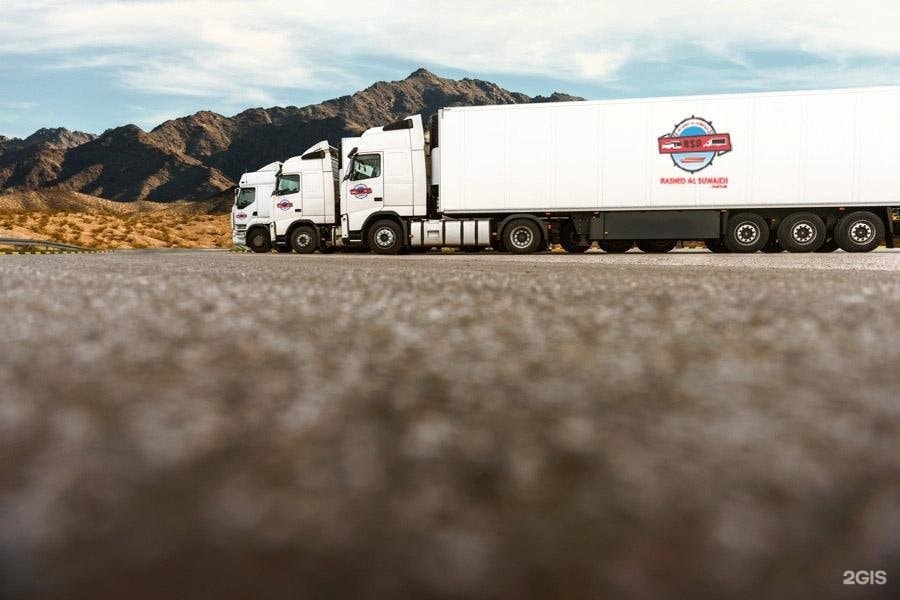
Road freight transport
Road Transportation in the UAE
Road is how nearly all domestic UAE freight actually moves. This page covers how we plan the road leg — vehicle selection, corridor choice, movement restrictions and the permits particular loads require.
At a glance
- Full truck load (FTL)
- Part load and consolidated movements (LTL)
- Vehicle matching
- Container haulage
Available across all seven emirates.
Quick answer
How does road transportation work in the UAE?
Road transportation in the UAE runs on a dense federal highway network linking the seven emirates, with the E11 following the coast from Abu Dhabi through Dubai to Ras Al Khaimah, the E311 and E611 providing inland alternatives around Dubai and Sharjah, and the E84 and E88 crossing the Hajar mountains to Fujairah and the east coast.
Planning a road movement means matching a vehicle to the cargo, choosing a corridor and departure time that respects each emirate's current heavy-vehicle rules — Dubai currently allows 24/7 truck movement until further notice except two tunnels; Abu Dhabi still applies peak-hour bans — carrying the correct documents for every gate on the route, and obtaining permits in advance where the load is oversized, overweight or classed as dangerous goods.
The UAE is unusually well suited to road freight. Distances between the main commercial centres are short, the highway network is modern, and a shipment landing at Jebel Ali can reach most of the country the same day. That accessibility is also why road planning gets underestimated.
The variables that decide whether a movement runs cleanly are practical: whether the vehicle can physically access the delivery point, whether the route is open to heavy vehicles at the time you intend to travel, whether the load needs a permit, and whether the documents required at each gate are in the cab.
RSG Shipping plans those variables before dispatch. Where a load is unusual — over-dimension, high value, temperature-sensitive, hazardous — we treat the permitting and handling requirements as part of the plan rather than as a problem to solve at the roadside.
Service summary
- Service
- Road freight transport
- Coverage
- All seven emirates of the UAE
- Typical clients
- Businesses moving containers inland from a port
- Where to start
- Send us the shipment details
Often combined with
What it covers
Scope of the service
Specific, so you can tell whether it matches what you need — and whether anything you need is missing.
- Full truck load (FTL)
- A dedicated vehicle for your cargo, direct from collection to delivery. Suited to full consignments, time-critical movements, high-value goods and anything you do not want handled more than necessary.
- Part load and consolidated movements (LTL)
- Shared capacity where a full vehicle is not justified. Cost-efficient for smaller volumes, with the trade-off that the schedule depends on the wider run.
- Vehicle matching
- Pickups and 3-tonne trucks for light urban work; 7-tonne and 10-tonne rigids for mid-weight distribution; trailers, flatbeds, low-beds and curtain-siders for containers, machinery and over-dimension loads. Selection follows the cargo and the site access, not the other way round.
- Container haulage
- Movement of 20ft and 40ft containers between terminals, free zones and premises, including drop-and-swap arrangements where a receiving site needs the box on the ground rather than the vehicle waiting.
- Permits for exceptional loads
- Where a load exceeds standard dimensional or weight limits, or falls under dangerous goods rules, a permit from the relevant authority is required before travel. We identify the requirement early and build the lead time into the plan.
- GCC cross-border runs
- Road movements to and from Saudi Arabia and Oman through the recognised land crossings, where border formalities and documentation drive the schedule far more than the distance does.
Process
How it works
What happens, in what order, and what we need from you at each stage.
Load and access assessment
Cargo weight, dimensions of the largest piece, packaging and stackability, plus what each end can handle — dock or ground level, forklift available or not, gate height, permitted hours.Vehicle and equipment selection
The smallest vehicle that safely and legally carries the load, with lifting or securing equipment specified where the site cannot provide it.Route and timing plan
Corridor selection with heavy-vehicle restrictions and peak congestion accounted for, and a departure time chosen so the vehicle arrives inside the receiving window.Permits and documentation
Any exceptional-load or dangerous-goods permits arranged, and the document set for the route confirmed — customs release or delivery order, gate passes, delivery notes.Dispatch and monitoring
The movement runs against the plan, with updates at collection, in transit and delivery, and early escalation if a gate, permit or access issue appears.Delivery confirmation
Signed proof of delivery returned, with any damage, shortage or delay recorded at the point it occurred.
Who it is for
Typical situations
If none of these describe you, the service may not be the right fit — and it is better to establish that now.
- Businesses moving containers inland from a port
- Importers who need boxes off the terminal and onto site quickly once release is granted.
- Distributors running regular inter-emirate routes
- Companies with predictable weekly or daily volumes between fixed points who want a consistent plan rather than repeated ad-hoc bookings.
- Contractors and industrial sites
- Teams receiving plant, materials and over-dimension items where access and sequencing are the hard part.
- Exporters feeding a port or airport cut-off
- Shippers who need cargo delivered into a terminal ahead of a documentation or gate cut-off, where late arrival means missing the vessel or flight.
What you get
Why it is worth doing this way
- Access confirmed before dispatch
- A vehicle that cannot physically reach the delivery point is an expensive discovery. We check first.
- Permit lead times built into the schedule
- Exceptional-load approvals are identified at planning stage, so the permit is not the reason the load waits.
- Corridor choice based on the actual route
- Restrictions and congestion differ by emirate, road and time of day; the plan reflects that rather than an average.
- Customs documents travelling with the load
- Our customs work and our transport work share the same file, so the paperwork at the gate matches the declaration.
FAQs
Road transportation — common questions
What is the difference between FTL and LTL?
How long does a road movement take between emirates?
Do you need a permit to move an oversized load?
Can you handle temperature-controlled road freight?
Do you move goods to Saudi Arabia and Oman by road?
Related pages
Next step
Need road transportation for a shipment?
Send us what you are moving and we will come back with the position, the plan and the price — or the questions we need answered first.
- No obligation, and no account setup required to get a quote
- We say what we handle ourselves and what we would arrange for you
- If a shipment is not viable as described, we will tell you that too