
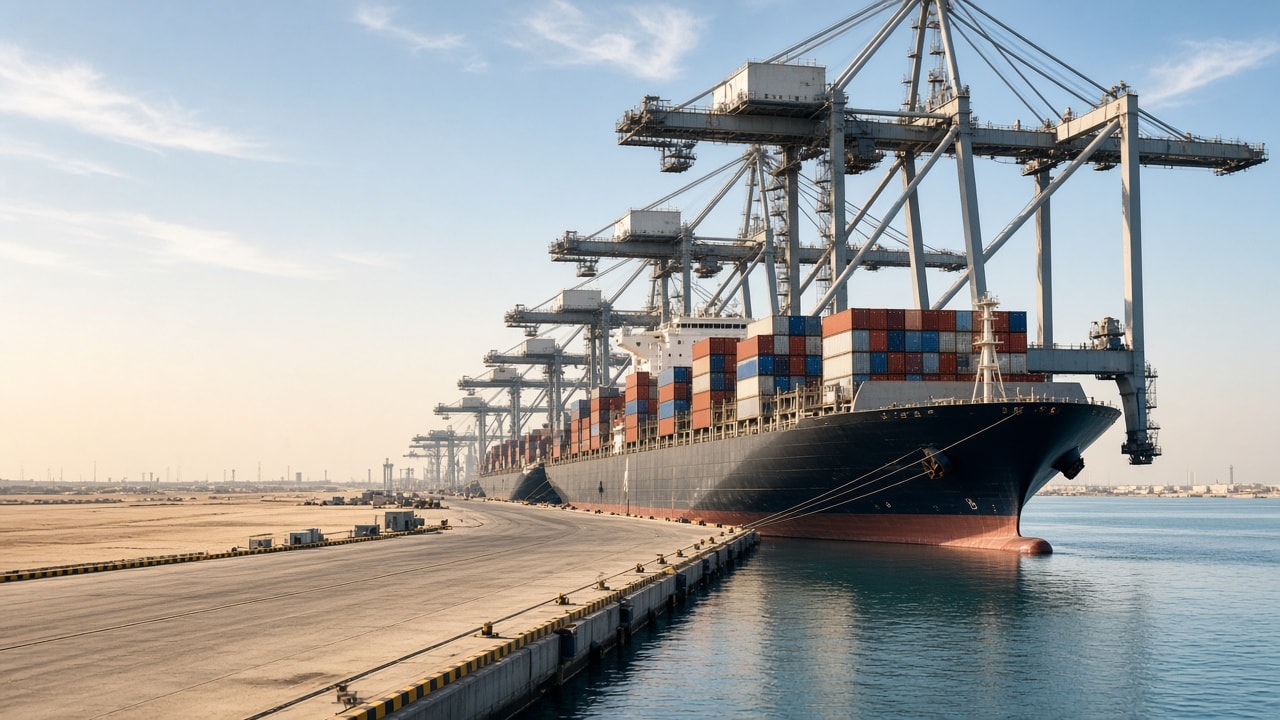
Freight forwarding
Freight Forwarding in the UAE
Freight forwarding is the arrangement of an international movement on your behalf — choosing the routing and mode, contracting the carriage, and making sure the documentation carries the shipment through customs at both ends.
At a glance
- Sea freight — FCL
- Sea freight — LCL
- Air freight
- Road freight to and from the GCC
Available across all seven emirates.
Quick answer
What is freight forwarding?
Freight forwarding is arranging the international transport of goods on behalf of a shipper. A forwarder selects the mode and routing, books space with sea, air or road carriers, consolidates cargo where it is efficient to do so, prepares and issues transport documentation, and coordinates customs formalities at origin and destination.
A forwarder does not usually own the ships, aircraft or trucks. Its value is in choosing the right combination, holding the contractual relationship with the carriers, and making sure the paperwork matches the movement so the cargo is not stopped at either border.
The UAE sits on the sea and air routes between Asia, Europe and Africa, which is why so much cargo either arrives here or passes through. That connectivity gives shippers real choice of routing — and choice is exactly what makes forwarding decisions consequential.
The mode question is usually a cost-versus-time trade-off, but not only that. Air freight is priced on chargeable weight, so low-density cargo can cost far more than its actual weight suggests. Sea freight is cheaper per tonne but adds transit time and requires enough volume to justify a container, or acceptance of the extra handling that consolidation involves.
Documentation is where forwarding intersects with customs. The transport document, the commercial invoice and the declaration have to agree. When they do not, the cargo waits.
Service summary
- Service
- Freight forwarding
- Coverage
- All seven emirates of the UAE
- Typical clients
- UAE importers buying from overseas suppliers
- Where to start
- Send us the shipment details
Often combined with
What it covers
Scope of the service
Specific, so you can tell whether it matches what you need — and whether anything you need is missing.
- Sea freight — FCL
- Full container loads where you have the volume to fill a 20ft or 40ft container, or where the cargo should not be handled alongside other consignments.
- Sea freight — LCL
- Consolidated shipments for part-container volumes: lower cost than a full box, with additional handling at the consolidation and deconsolidation points.
- Air freight
- For time-critical, high-value or perishable cargo. Priced on chargeable weight — the greater of actual weight and volumetric weight — which is why dimensions have to be accurate at quotation.
- Road freight to and from the GCC
- Cross-border road movements to neighbouring markets, where border formalities rather than distance set the transit time.
- Routing and mode advice
- Comparing realistic options on landed cost and total transit rather than headline freight rate, including where a combination of modes is the better answer.
- Transport documentation
- Preparation and checking of bills of lading, air waybills and consignment notes so they are consistent with the commercial documents and the customs declaration.
- Customs coordination at both ends
- Making sure export formalities at origin and import formalities in the UAE are aligned with the transport arrangement instead of being handled in isolation.
Process
How it works
What happens, in what order, and what we need from you at each stage.
Shipment brief
Origin and destination, commodity, gross weight and dimensions, packaging, readiness date, required delivery date, and the Incoterms rule agreed with your counterparty.Mode and routing options
Realistic options with the trade-offs stated: cost, transit, handling exposure and risk, so the decision is yours on the actual numbers.Booking and collection
Space confirmed with the carrier and collection arranged at origin, with cut-off times worked backwards from the sailing or flight.Documentation preparation
Transport documents drafted and checked against the commercial set, and any origin or permit documentation confirmed before departure.In-transit coordination
Milestones tracked and reported, with early warning where a schedule change affects your delivery date.Arrival, clearance and delivery
Customs formalities coordinated on arrival and onward transport arranged so the cargo moves as soon as it is released.
Who it is for
Typical situations
If none of these describe you, the service may not be the right fit — and it is better to establish that now.
- UAE importers buying from overseas suppliers
- Businesses that need a routing decision, a booking and documentation handled as one job.
- UAE exporters and re-exporters
- Companies shipping out of the UAE, including consolidated re-export from free zone stock.
- Businesses comparing air and sea
- Shippers who need the actual cost and transit trade-off for their cargo rather than a general rule.
- Companies with recurring lanes
- Organisations shipping the same route repeatedly who want consistent handling and predictable documentation.
What you get
Why it is worth doing this way
- Mode chosen on landed cost
- Chargeable weight, handling, duty and inland transport included — not just the freight rate, which is where comparisons usually mislead.
- Documents that match the declaration
- The transport document is checked against the commercial set and the intended customs treatment before departure.
- One file from origin to delivery
- The same team holds the forwarding, the customs position and the UAE inland movement.
- Schedule changes surfaced early
- Rolled sailings and flight changes happen; the useful part is hearing about them while alternatives still exist.
FAQs
Freight forwarding — common questions
What is the difference between sea freight and air freight?
What is chargeable weight in air freight?
What is the difference between FCL and LCL?
How do Incoterms affect who arranges freight?
Do you issue your own bill of lading?
Related pages
Next step
Need freight forwarding for a shipment?
Send us what you are moving and we will come back with the position, the plan and the price — or the questions we need answered first.
- No obligation, and no account setup required to get a quote
- We say what we handle ourselves and what we would arrange for you
- If a shipment is not viable as described, we will tell you that too