
Quick answer
How does customs clearance work in the UAE?
UAE customs clearance follows six stages: the carrier issues a delivery order once the goods arrive; a declaration of the correct type is prepared with the tariff classification and declared value; the declaration is lodged electronically with the customs authority of the emirate of arrival; customs duty and any applicable VAT are assessed and settled; the consignment is either released or selected for inspection or query; and once released, the cargo can be collected.
Any permit or approval a restricted commodity requires must be in place before the declaration can be processed, which is why permits are the most common cause of a shipment stalling at stage three.
Customs clearance is often described as a single event. It is closer to a sequence of six, and knowing which one a shipment is sitting in tells you what to do about it. What follows is the process as it applies to a commercial import arriving in the UAE, together with the points where consignments most often stall.
Who does what
Three parties are involved and their responsibilities do not overlap. The carrier or its agent holds the cargo and releases it once its own charges are settled and the transport document is surrendered. The customs authority of the emirate of arrival assesses the declaration and decides whether the consignment is released, queried or examined. The importer — or a registered clearing agent acting for them — prepares and lodges the declaration.
The distinction that matters commercially: customs release and carrier release are separate. You need both before anything physically moves, and a consignment can be cleared by customs while still sitting behind an unpaid carrier charge.
Declaration types come before HS codes
Before classification, the movement itself has to be characterised correctly. UAE customs authorities operate distinct declaration types, and the treatment of duty and VAT follows from the type as much as from the commodity. The common ones are:
- Import for local consumption from outside the country — goods entering the mainland market from abroad.
- Import from a free zone to the local market — goods already in the UAE under duty suspension being released into the mainland.
- Free zone transfer — movement between zones, or into a zone, which keeps goods under suspension.
- Transit — goods passing through the UAE to another destination under customs control, with the obligation discharged on exit.
- Export — goods of UAE origin or previously cleared goods leaving the country.
- Re-export — goods previously brought in being shipped out again, matched against the original entry record.
- Temporary admission — goods entering for a defined purpose and period, such as exhibition items or equipment for a project, on the basis that they will leave again.
A correct HS code on the wrong declaration type produces the wrong outcome. This is a common and expensive error where free zone stock is involved.
The six stages
1. Arrival and carrier release
The vessel or aircraft arrives and the cargo is discharged into a customs-controlled area. The consignee surrenders the original transport document, settles the carrier’s charges, and receives a delivery order authorising release of the cargo to them. Free time at the terminal starts running here, which is why the paperwork chain should be complete before arrival rather than after it.
2. Declaration preparation
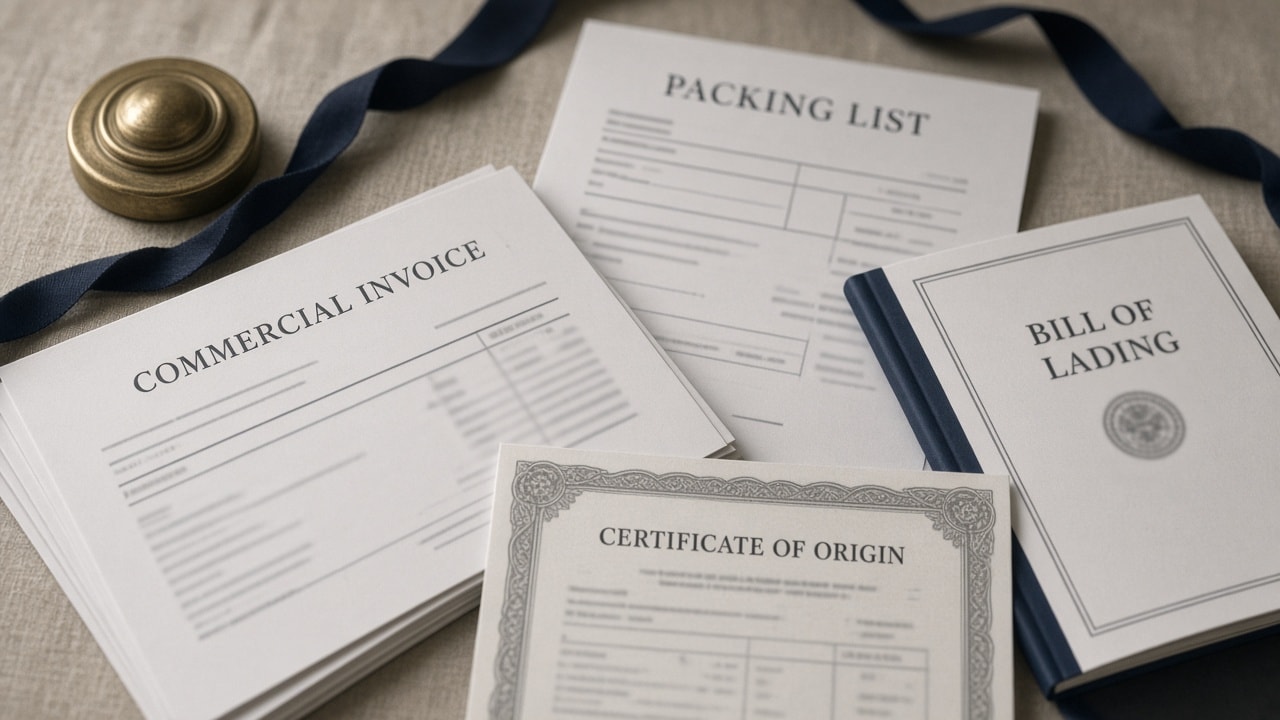
The declaration is built from the commercial invoice, the packing list, the transport document and the certificate of origin. It states the declaration type, the HS classification, the country of origin, the quantities and weights, and the customs value. Any permit or approval the commodity requires needs to be in hand at this point, not applied for.
The single most useful thing an importer can do at this stage is check the commercial documents against each other. See the documents required for UAE customs clearance for the fields that have to reconcile.
3. Lodging with the customs authority
Declarations are submitted electronically to the customs authority of the emirate where the goods physically arrived. Dubai lodges through Mirsal 2 on the Dubai Trade platform; Abu Dhabi through ATLP; Sharjah through E-Clearance; Ras Al Khaimah through Dhabi; Fujairah through AlFajr. Ajman and Umm Al Quwain administer their own systems. Lodging requires a registered business code, which is why an importer either registers itself or appoints a registered agent.
The underlying rules are federal and GCC-level, so duty rates and the substance of the law do not change between emirates. The systems, procedures and registrations do.
4. Assessment of duty and VAT
Customs duty is assessed under the GCC Common Customs Tariff on the CIF value of the goods — cost, insurance and freight — with the rate determined by the classification. VAT is a separate charge under Federal Tax Authority rules, assessed on a different basis, and its treatment depends on whether the importer is registered for VAT and on the destination of the goods. Registered importers commonly account for import VAT through the VAT return rather than paying it at the border.
Because these two charges are governed by different bodies of law and different authorities, they should be worked out separately. Treating “import charges” as one number is how landed cost calculations go wrong. The full picture is set out in our overview of importing and exporting in the UAE.
5. Release, query or examination
The declaration is either released, queried, or selected for physical examination. A query typically concerns valuation, classification or a document deficiency, and is resolved by supplying evidence. An examination checks the physical consignment against the declaration; where the two agree, it confirms the declaration and the consignment proceeds.
The consignment remains in the customs area throughout, and storage continues to accrue. The causes and the fixes are covered in why UAE customs clearance gets delayed.
6. Collection and delivery
With customs release and the carrier’s delivery order both in place, the cargo can be collected. This is the stage where preparation pays most visibly: an importer with transport already scheduled collects promptly, while one who begins arranging haulage after release accrues storage for the duration.
Once released, goods move freely within the UAE, so delivery to another emirate is a transport question rather than a second customs event. A subsequent movement into or out of a free zone is a separate customs procedure in its own right.
After release: records
The declaration and its supporting documents need to be retained. That obligation sits with the importer, not with the agent who filed on their behalf, and it applies under both customs and tax rules. Practically, this means asking your agent for the complete filed set rather than only the invoice for their services.
What to do first
If you are importing into the UAE for the first time, the sequence that avoids the most rework is: confirm the classification, confirm whether the commodity is restricted and which authority controls it, confirm the Incoterms rule so you know whether import clearance is even your responsibility, then check that your commercial documents agree with each other. Everything else follows from those four answers, and all four can be settled before an order is placed.
That is the substance of customs consulting — and it is the cheapest stage at which to change anything.
This guide describes general UAE procedure and is not advice on a specific shipment. Requirements vary by commodity, emirate and authority. Ask us about your consignment before acting on it.